

 Medically Reviewed
Written by Pooja Rawat, Medical Content Writer
Posted On: 26 Oct 2026,
Choosing a knee replacement surgeon in Delhi is an important decision for anyone experiencing persistent knee pain, stiffness, or difficulty walking. While searching online for the best knee replacement surgeon in Delhi in 2026, patients should look beyond rankings and promotional claims. Qualifications, experience in joint replacement, hospital facilities, treatment options, communication, and postoperative rehabilitation are important factors to consider.
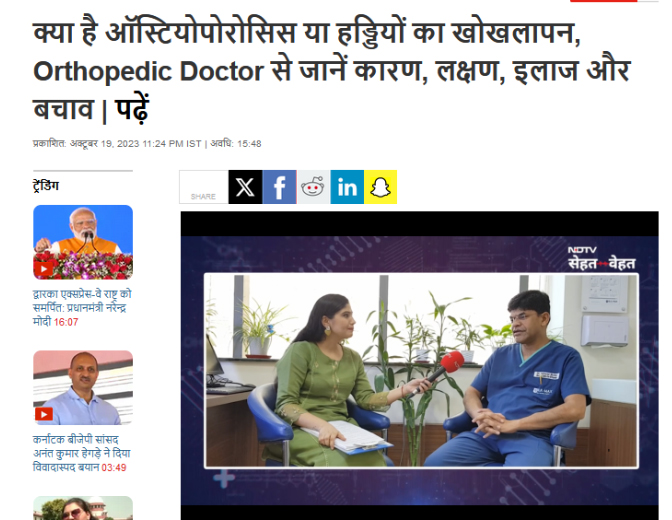
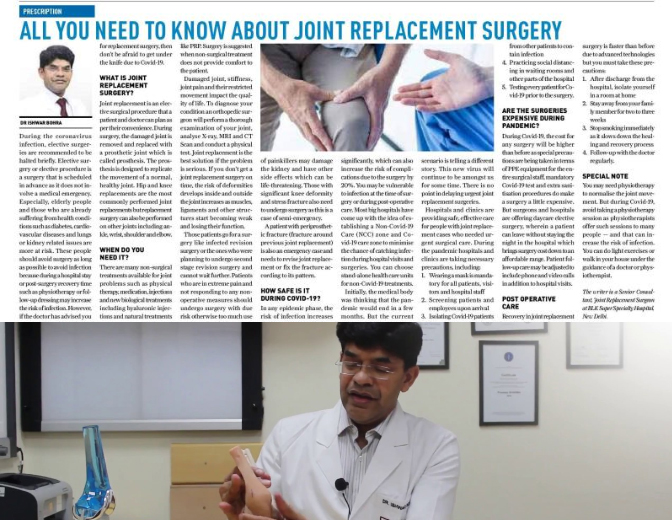
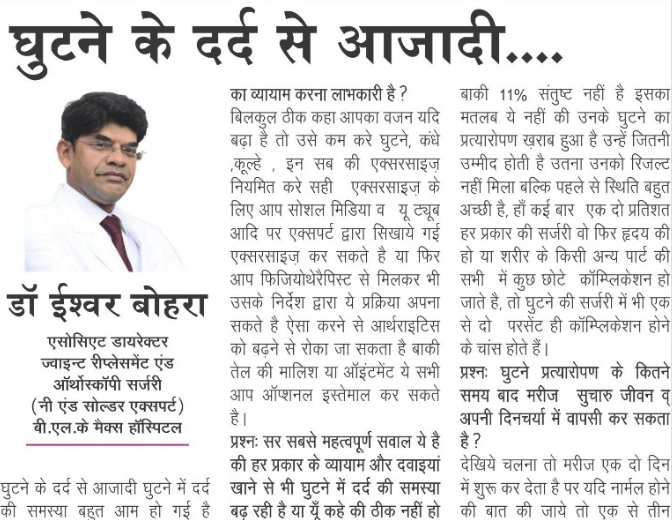
Dr. Ishwar Bohra is an orthopaedic and joint replacement surgeon associated with BLK-Max Super Speciality Hospital in New Delhi. His professional profile describes experience in knee replacement, hip replacement, joint reconstruction, and minimally invasive orthopaedic techniques. Patients considering surgery should independently review his current credentials and discuss their individual treatment needs during a consultation.
This guide explains what knee replacement involves, how to evaluate a surgeon, the role of robotic assistance, and the questions patients should ask before making a decision.
Dr. Ishwar Bohra is an orthopaedic surgeon whose clinical interests include knee and hip replacement and joint reconstruction. According to the professional information supplied for this article, he serves as Director of Orthopaedics at BLK-Max Super Speciality Hospital, New Delhi.
When evaluating an orthopaedic specialist, patients should consider verified qualifications, specialist training, relevant surgical experience, the availability of appropriate hospital facilities, and arrangements for rehabilitation.
| Factor | Information to review |
| Doctor | Dr. Ishwar Bohra |
| Specialty | Orthopaedics and joint replacement |
| Professional affiliation | BLK-Max Super Speciality Hospital, New Delhi |
| Areas of practice | Knee replacement, hip replacement and joint reconstruction |
| Surgical approaches | Conventional and, where appropriate, robotic-assisted techniques |
| Important considerations | Clinical assessment, treatment alternatives, risks and rehabilitation |
Professional designations, qualifications, registration details, and current hospital affiliations should be verified through the relevant official sources before publication or when arranging a consultation.
Also Read: Knee Replacement Surgery Cost in Delhi, India
Knee replacement, medically known as knee arthroplasty, is a surgical procedure in which damaged joint surfaces are replaced with artificial components. It is generally considered for people with substantial knee damage who continue to experience pain and functional limitations despite appropriate nonsurgical treatment.
Common reasons for considering knee replacement include:
The decision to undergo surgery depends on symptoms, physical examination, imaging findings, overall health, functional needs, and the response to other treatments. Knee replacement is not necessary for everyone with knee pain.
Also Read: Why Does My Knee Hurt While Climbing Stairs?
The two commonly discussed procedures are total knee replacement and partial knee replacement. The appropriate option depends on the location and extent of joint damage.
| Feature | Total Knee Replacement (TKR/TKA) | Partial Knee Replacement (PKR) |
| Area treated | The damaged joint surfaces across the knee compartments are replaced as appropriate | Only the affected compartment is replaced |
| Typical consideration | More extensive joint damage | Damage limited to a suitable compartment |
| Assessment | Extent of arthritis, alignment, stability and overall health | Compartment-specific damage, ligament function and suitability |
| Recovery | Depends on individual health and rehabilitation | May differ from total replacement, depending on the patient and procedure |
Neither procedure is automatically better for every patient. An orthopaedic surgeon can explain the expected benefits, limitations, risks, and suitability of each option.
Robotic-assisted knee replacement uses computer-based planning and specialised technology to assist selected stages of surgery. The surgeon remains responsible for clinical decisions and performing the procedure.
Conventional knee replacement uses established surgical instruments and planning techniques. Both approaches may be appropriate, depending on the patient's condition, the surgeon's assessment, and the facilities available.
| Consideration | Robotic-assisted surgery | Conventional surgery |
| Planning | May incorporate detailed digital planning and intraoperative information | Uses clinical evaluation, imaging and established planning methods |
| Surgical control | The surgeon directs and performs the procedure with technological assistance | The surgeon directs and performs the procedure using conventional instruments |
| Potential advantages | May improve certain measures of alignment or positioning in selected settings | An established approach with evidence supporting its clinical use |
| Recovery | Depends on patient factors, surgery and rehabilitation | Depends on patient factors, surgery and rehabilitation |
| Cost | May involve additional technology-related costs | Varies by hospital, implants and treatment requirements |
Patients should ask whether robotic assistance is appropriate for their particular knee condition and whether it is expected to change any meaningful aspect of their treatment. The use of a robot alone does not guarantee better pain relief, faster recovery, or a superior outcome.
Research on patient preferences for joint replacement in India identifies several factors that influence surgeon selection, including professional experience, reputation, hospital infrastructure, affordability, referrals, and patient expectations.
Check the surgeon's recognised medical qualifications, registration status, orthopaedic training, and relevant fellowships. Confirm that the training and experience relate to the procedure being considered.
Rather than relying on general claims about the number of operations performed, ask about experience with procedures similar to yours. Discuss the surgeon's approach to complications, revision surgery where relevant, and outcome monitoring.
Consider operating theatre standards, infection-prevention practices, anaesthesia services, nursing support, emergency facilities, and access to physiotherapy. A coordinated care pathway is an important part of surgical planning and recovery.
Request an itemised estimate covering surgeon and hospital charges, implants, investigations, medicines, hospital stay, and rehabilitation. Confirm insurance coverage, exclusions, and any applicable public healthcare scheme eligibility.
A consultation should provide an opportunity to discuss the diagnosis, alternatives to surgery, expected benefits, possible complications, rehabilitation, and realistic recovery goals. Patients should feel able to ask questions and seek a second opinion when appropriate.
Knee replacement may be considered when symptoms substantially affect daily activities and appropriate nonsurgical treatments have not provided sufficient relief.
Possible warning signs include:
These symptoms do not automatically mean surgery is required. A clinical evaluation is necessary to determine the cause of pain and whether medication, physiotherapy, activity modification, weight management where appropriate, or other treatments may help.
Before deciding on surgery, consider asking your surgeon:
The answers should be specific to your health, examination findings, and treatment goals rather than based on generalised promises.
There is no single objectively best surgeon for every patient. Compare verified qualifications, relevant surgical experience, hospital facilities, communication, treatment options, and postoperative support. Dr. Ishwar Bohra is an orthopaedic and joint replacement surgeon associated with BLK-Max Super Speciality Hospital in New Delhi.
The cost varies according to the hospital, implant, procedure, medical requirements, length of stay, and rehabilitation plan. Patients should request an itemised estimate and confirm their insurance or scheme coverage.
Robotic assistance may improve certain technical measures, including implant alignment in some settings. However, meaningful clinical benefits vary, and the technology does not guarantee better results for every patient. The choice should follow an individual assessment.
Recovery varies according to overall health, the procedure, complications, and participation in rehabilitation. Many patients resume basic daily activities progressively over the first several weeks, while strength and functional improvement may continue for months. The treating team should provide an individualised recovery plan.
Potential complications include infection, blood clots, stiffness, persistent pain, implant-related problems, and injury to surrounding structures. The individual risk depends on medical history and other factors. Discuss preventive measures and warning signs with the treating team.
Some patients can manage symptoms through exercise-based physiotherapy, activity modification, medication, and other suitable treatments. Whether surgery can be delayed or avoided depends on the diagnosis, symptom severity, and response to treatment.
Choosing a knee replacement surgeon in Delhi requires careful consideration of clinical expertise, recognised qualifications, hospital facilities, affordability, treatment alternatives, and rehabilitation support. Patients should evaluate these factors alongside their own health needs and expectations instead of relying on rankings or promotional claims.
Dr. Ishwar Bohra's professional profile identifies knee replacement, hip replacement, and joint reconstruction among his areas of practice. Anyone considering treatment should verify current professional details and arrange a clinical consultation to understand the available options.
The most appropriate treatment is the one selected through informed discussion, individual assessment, and a realistic understanding of benefits, risks, and recovery.
Reference
Aneja K, Rudraraju RT, Shyam A. Influential Factors to Patients When Choosing a Joint Replacement Surgeon in India. Journal of Orthopaedic Case Reports.
Available at: https://pmc.ncbi.nlm.nih.gov/articles/PMC12778910/
Medical information notice: This article is intended for general educational purposes and does not replace an individual medical consultation.

Staying abreast with the latest information is the best way to combat diseases in early stages and live a healthy life. Read the latest news & updates here to learn about the recent advancements in joint care and therapeutics.