
 Medically Reviewed
Written by Pooja Rawat, Medical Content Writer
Posted On: 12 Nov 2026,
Gout is a form of arthritis in which there is development of uric acid crystals inside the joint. This can lead to severe pain, redness, tenderness, and discomfort. The only difference is that arthritis is a broad term that covers a wide range of joint diseases, including rheumatoid arthritis and osteoarthritis. Doctors diagnose gout by performing a joint examination and assessing blood urate levels. There is no cure for gout, but it can be managed with the help of prescription medications, and steroids.
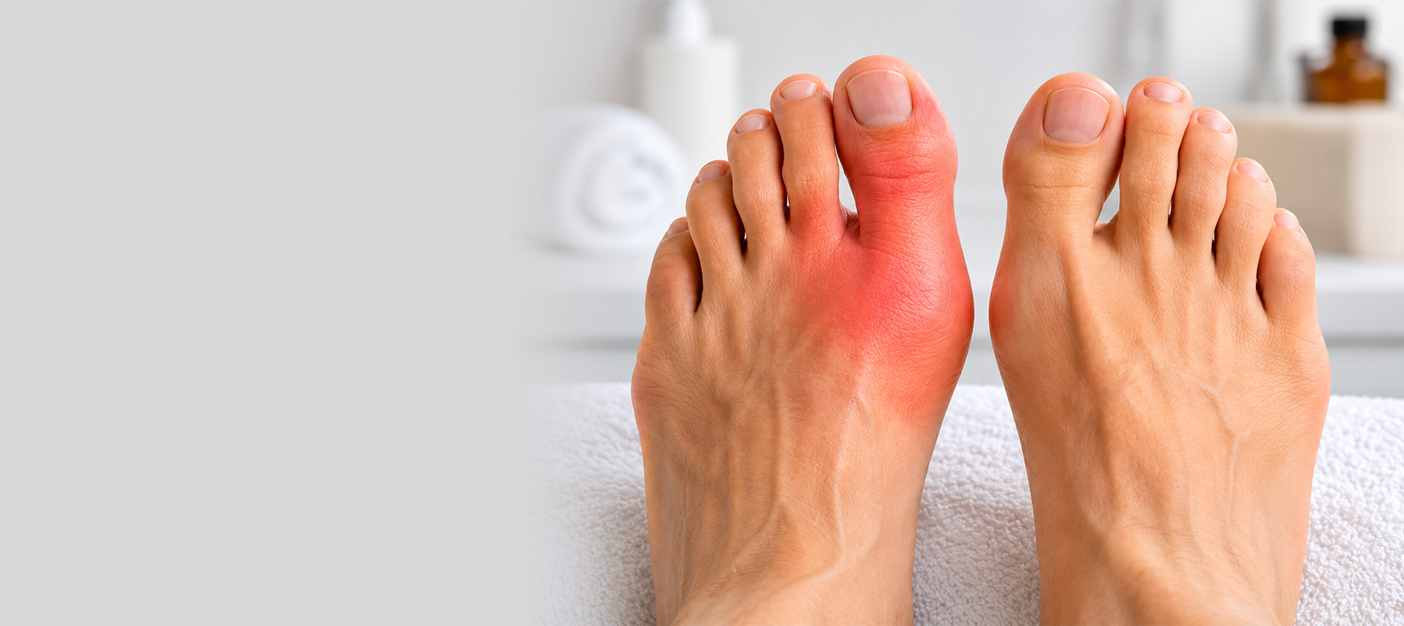
Gout is a type of arthritis which happens when there is a buildup of urate in the body. These are sharp crystals of monosodium urate that can develop inside and/or around a joint, especially in the big toe. While the crystals accumulate over a period of time, gout symptoms trigger suddenly, causing intense inflammation and unbearable pain.
Also Read: Left Arm Numbness: What It Means And How To Treat It
Gout happens to be one of the most common and painful forms of arthritis, which generally affects middle-aged men. Postmenopausal women are also highly susceptible to it. It has been linked to unhealthy dietary habits, increased alcohol consumption, and obesity.
Arthritis is not one disease. It is a group of more than a hundred conditions that inflame or wear down joints. Gout belongs to this group, so the useful comparison is between gout and the other common types, mainly osteoarthritis and rheumatoid arthritis.
Unlike osteoarthritis, which is caused by gradual wear and tear, or rheumatoid arthritis, which is linked to an autoimmune condition, gout is directly linked to metabolic problems in the body. The first gout flare usually affects one joint in the body, which can be in the toe, ankle, or knee. The pain is sudden and is often experienced at night. It can be so intense that even a slight rub against the bedsheet can make you uncomfortable.
While people often link high uric acid to gout, it is important to understand that some people may have high urate and still not experience any symptoms, whereas some may have the symptoms even when their urate levels are temporarily lower.
| Feature | Gout | Osteoarthritis | Rheumatoid arthritis |
| Main cause | This is caused by the deposit of urate crystals in the joints due to high uric acid buildup in the body | This is caused by age-related wear and tear or injury to the joint cartilage | This is caused by an autoimmune response, due to which the immune system starts attacking the healthy joints |
| Typical onset | There is a sudden flare affecting one joint, usually at night | Joint pain and inflammation that intensifies gradually | Develops gradually; however, it may also be acute in some cases |
| Common joints | Usually affects the big toe and can also affect the ankle and knee joint | Can affect joints in the knees, hips, hands, and spine | Usually affects smaller joints in the body, such as fingers of the hands, feet, etc. |
| Appearance | Red and tender joints. Swelling may also be there. | Swelling and stiffness | Feeling stiffness and tenderness that increases in the morning |
| Pattern | There are flares that last for a week or two. These keep recurring from time to time | The symptoms are persistent and keep becoming worse with time | Symptoms are persistent and aggravate with time |
Uric acid joint pain can be very severe and even unbearable at times. Let’s try to understand why.
Our bodies produce uric acid as a waste product when it breaks down purines, a natural substance that is found within our cells as well as certain foods and drinks. Normally, uric acid dissolves in the blood and then is thrown out of the body along with the urine. Now, trouble arises when the body produces too much uric acid and the kidneys are not able to get rid of it. The uric acid starts accumulating and crystallizes in joint fluid. This leads to the development of needle-like, tiny crystals that trigger an inflammatory response from the immune system.
Some joints are more vulnerable to it than others. This is because it is easier for the crystals to develop in joints that are not as mobile and have minimal fluid circulation. Hence, the joint at the base of the big toe is affected the most. However, it may affect joints in other parts of the body as well, such as the ankle, knee, wrist, fingers, or elbow.
Also Read: जोड़ों में दर्द क्यों होता है: लक्षण, कारण और उपचार
Uric acid flares can be experienced when there is a sudden rise or fall in urate levels. There are some factors that are known to trigger this. These are:
According to the National Institute of Arthritis and Musculoskeletal and Skin Diseases, many people with high uric acid levels might never develop gout. There are other factors that may play a role in it, such as family history, obesity, high alcohol consumption, hypertension, kidney disease, and taking certain medicines like diuretics.
Gout diagnosis starts with a physical examination of the joint. The doctor may ask you to get some blood tests done to assess the uric acid level in the blood, as well as to evaluate the person’s kidney function and inflammation markers. Just because the uric acid level is high does not necessarily mean that the person has gout. Other factors have to be taken into consideration as well.
The most reliable means of diagnosing gout is by taking a sample of joint fluid and analyzing it under a microscope to look for urate crystals. Imaging tests like X-ray, ultrasound, and dual-energy CT scan can help to show crystal deposits or the extent of joint damage.
Treatment of gout depends on two things: addressing what is causing the flares and preventing the next one.
In order to manage the pain, tenderness, and inflammation during a gout flare, doctors usually prescribe anti-inflammatory medication. However, these do not help to lower the uric acid levels. They just help with the symptoms.
To prevent the flares, doctors may recommend lifestyle changes along with urate-lowering medication.
Gout and arthritis are not different from each other, and gout is a type of arthritis. It is caused by the development of uric acid crystals in vulnerable joints of the body, which leads to intense pain and swelling. Gout flares can last for a week or two, and they keep recurring from time to time, especially if they get triggered by certain factors. Gout cannot be cured, but it can be effectively managed with proper care and treatment. To know more, consult Dr. Ishwar Bohra today.
Q1: Is gout the same as arthritis?
A: Gout is a type of arthritis. Arthritis is an umbrella term used for many other such conditions, including rheumatoid arthritis and osteoarthritis.
Q2: Does high uric acid always cause gout?
A: No, having high uric acid does not always mean that the person will have gout. In fact, people may have high uric acid for years without developing the condition. It only becomes a problem when there is a development of urate crystals.
Q3: Which joint is affected first in gout?
A: Gout usually affects the joints that are more vulnerable, such as the toe joint, because it is less mobile compared to other joints. The ankle, knee, wrist, and fingers can also be involved.
Q4: How long does a gout attack last?
A: A gout attack can last for anywhere between 3 and 10 days. With proper treatment, this span can be reduced.
Q5: Can uric acid be controlled with diet alone?
A: Diet can help to reduce uric acid levels, but it is not the complete treatment, and the patient needs to take medication prescribed by the doctor.
References
National Institute of Arthritis and Musculoskeletal and Skin Diseases (NIAMS). Gout. https://www.niams.nih.gov/health-topics/gout

Staying abreast with the latest information is the best way to combat diseases in early stages and live a healthy life. Read the latest news & updates here to learn about the recent advancements in joint care and therapeutics.