

 Medically Reviewed
Written by Pooja Rawat, Medical Content Writer
Posted On: 06 Apr 2026,
Running bad for knees this is one of the common myths that people believe in. In fact, when done properly, the many medical research studies have observed that running has a protective effect against arthritis.
A 2022 cross-sectional study, the team conducted an online survey between June 18 and October 1, 2020, and concluded that adjusting running habits, not quitting, is generally good for knee health.
The 2024 study on 3,804 marathon runners concluded that long-distance running does not increase hip or knee arthritis risk. However there were risk factors such as age, higher BMI, prior injuries, surgery, and family history.
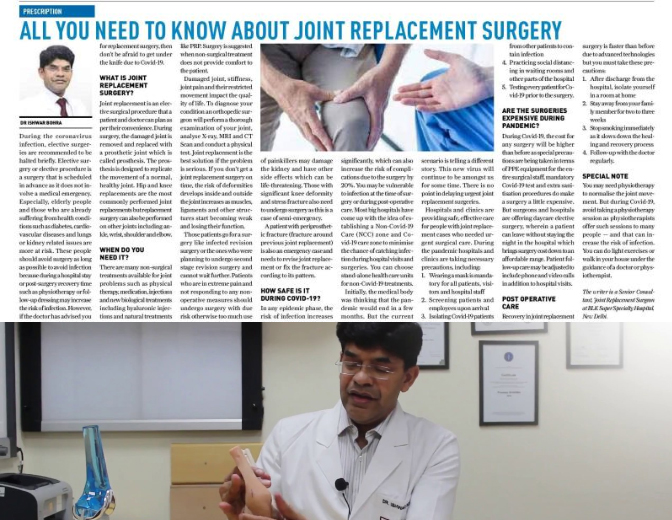
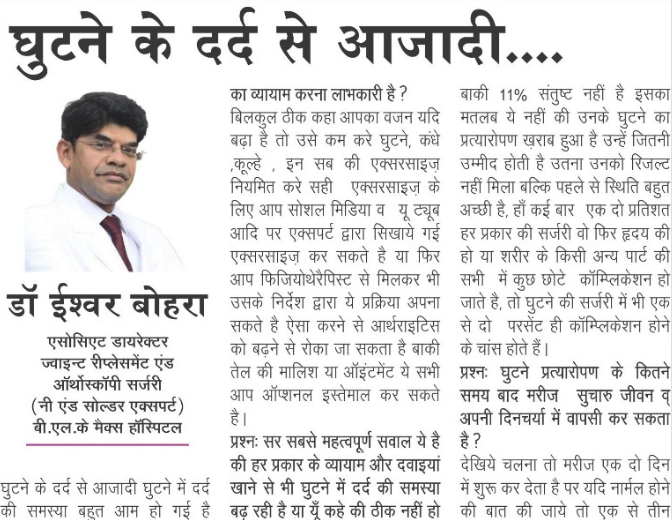
However, knee specialists like Dr Ishwar Bohra (over 24 years) suggest if you are developing pain with running, it is important to change your exercise routine and include some lower-impact exercise under professional guidance.
People believe in this myth "running is bad for knees” because they think:
But scientific research does not strongly support these reasons; they say the benefit lies in running with the right method and strategy.
Here are the benefits backed by many experts:
Other benefits of running are:
Runners can experience running knee pain, often called "runner's knee" (patellofemoral pain syndrome) because of the following reasons:
Also Read : Best Orthopedic Surgeon in Dwarka | Expert Bone & Joint Care
You can easily treat knee pain at home most of the time. For example, some methods include:
However, if the pain persists, it is best to seek a doctor’s advice. Proper diagnosis will be done through X-rays, MRI scans and CT scans. Based on the cause, the experts may also recommend physiotherapy or steroid injections.
These smart habits can make a big difference:
| Experts Tip | Key Advice |
| Strengthen Supporting Muscles | Squats, lunges, calf raises for quads, hamstrings, glutes, hips to absorb impact. |
| Proper Form | Slight knee bend; land feet under body; shorten stride, increase cadence. |
| 10% Rule | Increase mileage/intensity ≤10% weekly to prevent overuse. |
| Right Shoes | Replace every 300-500 miles; use inserts for alignment issues. |
| Softer Surfaces | Choose dirt, gravel, tracks over asphalt/concrete. |
| Warm Up/Cool Down | Dynamic stretches pre-run; static post-run. |
| Healthy Weight | Reduce weight to lessen knee stress. |
| Rest & Recover | Allow recovery time between runs for cartilage repair. |
Look for these qualities in a knee-friendly running shoes
If you already have knee osteoarthritis or cartilage damage, then consult your sports physician or physiotherapist first and ask them to personalise an exercise plan according to the type and severity of your condition.
Experts often recommend:
Also Read: Daily Habits to Keep Your Joints Healthy and Strong
The idea that running damages your knees is largely an incorrect belief.
Scientific evidence observes that:
To prevent running-related issues, you should avoid training mistakes and poor biomechanics or properly address previous injuries.
Dr. Ishwar Bohra at BLK-Max Super Speciality Hospital, is a well-renowned Joint Replacement Surgeon. He has over 24 years of global experience in carrying out knee- and hip-related procedures, and surgeries related to sports injuries.
His Previous Experience:
His expertise includes:
You can explore the stories of happy patients here.
Contact us at +91-9582280201, ishwar.bohra@gmail.com or anandrishma@gmail.com to improve your knee health.
Q1. Is running bad for your knees?
No, running is not bad for your knees when done correctly. Studies show that recreational running can actually protect against knee arthritis and improve joint health.
Q2. Can running cause knee arthritis?
There is no strong evidence that running causes knee arthritis. In fact, runners often have a lower risk of osteoarthritis compared to inactive individuals.
Q3. Why do runners experience knee pain?
Knee pain in runners is usually caused by overtraining, poor running technique, muscle imbalances, or previous injuries rather than running itself.
Q4. What is runner’s knee?
Runner’s knee, also known as patellofemoral pain syndrome (PFPS), is a common condition that causes pain around the kneecap due to stress or misalignment.
Q5. How can I prevent knee pain while running?
You can prevent knee pain by maintaining proper running form, strengthening leg muscles, wearing the right shoes, and gradually increasing your training intensity.
Q6. Is running good for joint health?
Yes, running helps improve joint health by strengthening muscles, improving cartilage function, and maintaining a healthy body weight.

Staying abreast with the latest information is the best way to combat diseases in early stages and live a healthy life. Read the latest news & updates here to learn about the recent advancements in joint care and therapeutics.