

 Medically Reviewed
Written by Pooja Rawat, Medical Content Writer
Posted On: 03 Jun 2026,
Arthritis of the knee is a serious, painful disease that gets worse with age. Knee arthritis can make even simple daily tasks feel like climbing a mountain with a backpack full of bricks.
You may notice that walking upstairs, getting out of bed, sitting cross-legged, or even standing for too long suddenly becomes very uncomfortable.
But here’s the good news for you: the right exercises, such as hamstring stretch, calf stretch, and quad set for knee arthritis, can help lower pain, improve mobility, and strengthen your joints naturally.
Like others, you might have the wrong belief that “rest” is the best solution for arthritis pain; orthopedic experts say otherwise. Your knee works a lot like a door hinge—if it stays idle for too long, it becomes stiff and more difficult to move.
Gentle movement gives you benefits like:
Hence, follow a right exercise routine under professional guidance so that you can enjoy pain-free movement every day.
Read this guide to know:
Always remember to timely seek medical evaluation if you are experiencing severe pain, joint instability, or visible deformity or if pain persists for more than 2–3 weeks despite resting.
The best exercises for knee arthritis are low-impact movements that strengthen the muscles around the knee without putting excessive pressure on the joint.
| Exercise | Main Benefit | Difficulty Level |
| Straight Leg Raises | Strengthens quadriceps | Easy |
| Bridging | Supports knees through glute strength | Easy |
| Mini Squats | Improves mobility and stability | Moderate |
| Step-Ups | Builds knee function for daily movement | Moderate |
| Hamstring Stretch | Reduces stiffness | Easy |
| Cycling | Improves joint movement with low impact | Easy |
| Water Aerobics | Relieves pressure on knees | Easy |
| Yoga | Improves flexibility and balance | Moderate |
These arthritis relief exercises are especially helpful for people with osteoarthritis, stiffness after inactivity, or age-related knee pain.
When arthritis develops, the cartilage inside the knee gradually wears down. This creates friction, inflammation, stiffness, and pain.
But the real hidden problem is muscle weakness.
Weak thigh and hip muscles force the knee joint to handle more pressure than it should. That’s where knee strengthening exercises become important.
Think of your muscles like suspension cables on a bridge. If the cables weaken, the bridge takes more stress. Strong muscles absorb impact and stabilize the knee.
According to orthopedic specialists and physical therapists, regular movement can help:
Here are the exercises that you can learn under professional guidance and practice routinely.
This is one of the safest beginner-friendly knee pain exercises.
How to do it:
Recommended:
Why it works:
Bridging strengthens the glutes and hamstrings, reducing pressure on the knees.
Steps:
Benefits:
A lot of orthopedic experts recommend bridging because weak hips often contribute to knee pain.
Deep squats can irritate arthritis pain, but mini squats are much safer.
How to perform:
Important:
| Mini Squats vs Deep Squats | Mini Squats | Deep Squats |
| Joint Pressure | Low | High |
| Arthritis-Friendly | Yes | Often No |
| Recommended by Experts | Yes | Usually Avoided |
Mini squats help build strength while minimizing joint stress.
Step-ups improve functional movement like climbing stairs.
Instructions:
Benefits:
This exercise mimics daily movement patterns, making it highly practical.
Tight hamstrings can increase pressure on the knee.
Simple stretch:
Benefits:
Stretching exercises are often overlooked but play a major role in arthritis relief exercises.
Not all workouts are suitable for arthritic knees. High-impact activities may worsen pain.
Here are the safest low-impact options.
| Exercise Type | Joint Impact | Arthritis-Friendly |
| Swimming | Very Low | Excellent |
| Cycling | Low | Excellent |
| Walking | Low | Good |
| Water Aerobics | Very Low | Excellent |
| Running | High | Usually Avoid |
| Jumping Exercises | High | Avoid |
Water supports body weight, reducing pressure on painful knees.
Many studies show aquatic exercise is one of the most effective exercises for knee arthritis, especially for pain relief.
Stationary cycling improves mobility without harsh impact.
The circular motion helps lubricate the knee joint while strengthening leg muscles gently.
Orthopedic specialists often recommend:
Walking remains one of the simplest and most effective arthritis relief exercises.
But there’s a trick:
Consistency matters more than intensity.
Some exercises place excessive stress on the knee joint.
Here’s a quick overview.
| Exercise | Safe for Knee Arthritis? |
| Deep Lunges | No |
| Jump Squats | No |
| Swimming | Yes |
| Yoga | Yes |
| Walking | Yes |
| Sprinting | Usually No |
Avoiding harmful movements is just as important as choosing the right knee strengthening exercises.
A common mistake is doing too much too quickly.
Orthopedic experts generally recommend:
| Fitness Level | Recommended Duration |
| Beginner | 10 minutes daily |
| Moderate Arthritis | 20-30 minutes |
| Advanced Routine | 30-45 minutes |
Mild soreness is normal. Sharp joint pain is not.
If your pain significantly increases after exercise and doesn’t settle within 24 hours, reduce intensity and consult a healthcare provider.
Do you know? The most common types of arthritis are osteoarthritis and rheumatoid arthritis, but there are more than 100 different forms. While arthritis is mainly an adult disease, some types can affect children as well.
Recent studies and systematic reviews have shown that exercise therapy significantly improves:
Research comparing different exercise styles found:
This confirms what orthopedic experts have been saying for years: movement is medicine for arthritic knees.
If you’re unsure where to start, try this beginner-friendly routine.
| Exercise | Duration/Reps |
| Straight Leg Raise | 10 reps |
| Bridging | 10 reps |
| Hamstring Stretch | 15 seconds |
| Mini Squats | 5 reps |
| Walking | 10 minutes |
Start slowly and increase gradually over time.
Exercise helps most people, but certain symptoms should not be ignored.
A personalized plan from a physical therapist or orthopedic expert may be necessary if symptoms worsen.
Living with knee arthritis is frustrating, but staying inactive often makes things worse. The right exercises for knee arthritis can strengthen muscles, improve flexibility, reduce stiffness, and help you move more comfortably in daily life.
The key is consistency, not intensity.
You don’t need intense gym workouts or complicated routines. Even simple knee pain exercises done regularly can make a noticeable difference over time.
Think of exercise like oiling a rusty hinge. The more safely and consistently you move, the smoother things begin to feel.
Start small. Stay consistent. Listen to your body. And remember — movement, when done correctly, is one of the most powerful natural treatments for knee arthritis.
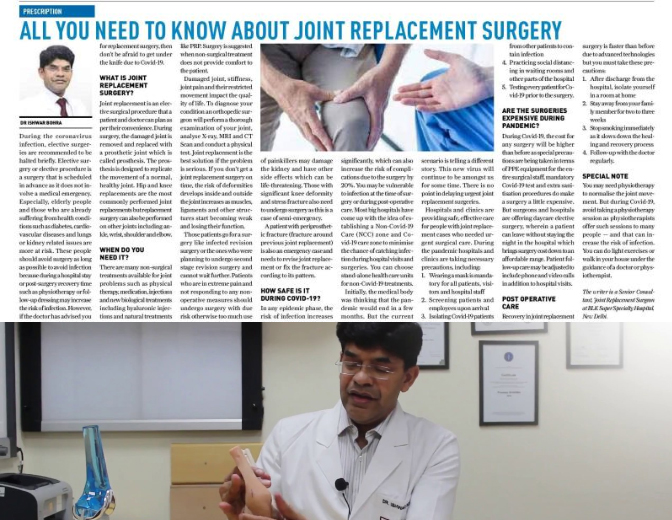
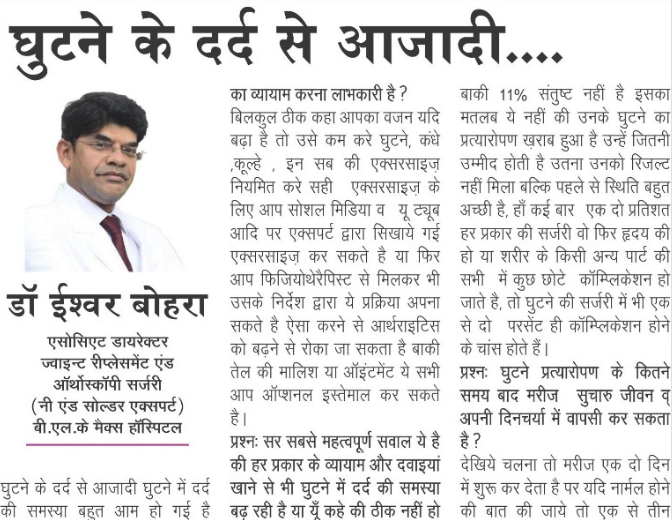
If knee pain, stiffness, or difficulty walking is affecting your daily life, getting the right orthopedic care early can make a huge difference. Dr. Ishwar Bohra is a trusted name in orthopedic care and joint replacement surgery, known for providing personalized treatment for knee arthritis and other joint conditions. You can read the insights shared by Dr. Ishwar on joint issues here.
Book a Consultation
Phone: +91-9582280201
Email: ishwar.bohra@gmail.com or anandrishma@gmail.com
Whether you need expert guidance, non-surgical treatment, or advanced knee replacement consultation, connect with Dr. Ishwar Bohra for professional orthopedic care in Delhi.
Explore the Positive patient outcomes and recovery stories
Q1: How to relieve arthritis pain in knee?
A: Rest, ice packs, gentle stretching, low-impact exercise (like walking), weight control, and over-the-counter pain relievers like acetaminophen can reduce knee arthritis pain effectively.
Q2: What does arthritis feel like in the knee?
A: Knee arthritis feels like dull aching, stiffness (especially mornings), swelling, warmth, grinding sensations, and pain worsening with activity or standing.
Q3: Can you live a normal life with knee osteoarthritis?
A: Yes—most people live normally with weight management, regular low-impact exercise, physical therapy, and pain management strategies to maintain daily activities.
Q4: What is the best diet for arthritis?
A: Eat anti-inflammatory foods: fruits, vegetables, omega-3-rich fish (salmon), olive oil, whole grains; avoid processed foods, sugar, and fried meats to reduce joint inflammation.

Staying abreast with the latest information is the best way to combat diseases in early stages and live a healthy life. Read the latest news & updates here to learn about the recent advancements in joint care and therapeutics.