
.jpg)
 Medically Reviewed
Written by Pooja Rawat, Medical Content Writer
Posted On: 02 Jun 2026,
If your knee pain is starting to control your daily life instead of just “visiting occasionally,” it may be more than simple aging. One of the biggest mistakes people make is waiting too long before considering treatment. The body often whispers before it screams — and your knees do the same.
The early signs you need knee replacement surgery usually include persistent pain, stiffness, swelling, reduced mobility, difficulty walking, and knee deformity that does not improve with medication or therapy.
Think of your knee like the shock absorber of a car. In the beginning, a worn shock absorber only causes a slightly uncomfortable ride. Ignore it long enough, and eventually every bump feels painful, the vehicle becomes unstable, and other parts start getting damaged too. Your knee joint behaves in a similar way.
In this guide, we’ll break down the most common signs you need knee replacement, explain when knee arthritis becomes serious, and help you understand when conservative treatments stop working.
| Early Sign | What It May Mean |
| Persistent knee pain | Joint cartilage may be severely worn |
| Morning stiffness | Common symptom of knee arthritis |
| Swelling that keeps returning | Ongoing joint inflammation |
| Difficulty climbing stairs | Reduced knee strength and flexibility |
| Knee deformity | Advanced joint damage |
| Pain even during rest | Arthritis progression |
| Treatments stop working | Surgery may become the next option |
Before understanding the warning signs, it helps to know what’s happening inside the knee.
Your knee joint contains cartilage — a smooth, protective layer that allows bones to glide without friction. Over time, arthritis, injury, or wear-and-tear can break down this cushioning.
Once the cartilage starts disappearing, the bones begin rubbing against each other like sandpaper.
That friction causes:
This is why many people with advanced knee arthritis symptoms describe their knees as feeling “stuck,” “grinding,” or “weak.”
These seven signs are present.
Occasional knee pain after a long day is common. Constant pain is not.
One of the clearest signs you need knee replacement is pain that:
Many patients describe it as carrying a “heavy rusted hinge” inside the knee.
In early arthritis, pain usually appears during activity. In advanced arthritis, the pain begins staying even after activity ends.
If you avoid walking, shopping, stairs, or even short outings because of knee pain, your quality of life is already being affected.
That is usually the point where doctors begin evaluating surgical options.
Does your knee feel locked when you wake up?
Morning stiffness is one of the most overlooked joint damage symptoms.
A healthy knee should loosen naturally within a few minutes. But damaged joints often remain stiff for extended periods because inflammation builds overnight.
You may notice:
Think of it like an old door that becomes harder to open during winter.
The longer stiffness lasts, the more likely the joint damage is progressing.
Temporary swelling after intense activity can happen to anyone.
But repeated swelling is often a warning sign of knee arthritis progression.
When the joint becomes damaged, the body responds with inflammation. This creates fluid buildup inside the knee.
Common signs include:
Persistent swelling usually means the knee is struggling to protect itself from ongoing damage.
If swelling returns despite medication, rest, or injections, your doctor may start discussing advanced knee pain treatment options.
One of the biggest indicators that knee damage is affecting daily life is reduced mobility.
Simple activities become frustrating:
Many patients begin changing their lifestyle without realizing it.
They stop traveling.
They avoid social events.
They sit more often.
They depend on railings or support.
This gradual lifestyle shrinkage is one of the strongest signs that the knee joint is no longer functioning properly.
Ask yourself:
“Am I planning my day around my knee pain?”
If the answer is yes, your knee may need more than temporary treatment.
Not every clicking sound is dangerous.
But loud grinding or crunching combined with pain often signals cartilage loss.
Doctors call this “crepitus.”
Imagine driving a car without oil in the engine. Metal parts begin rubbing directly against each other. That is similar to what happens inside an arthritic knee.
You may notice:
These symptoms are especially common in advanced osteoarthritis.
Visible knee deformity is a major warning sign.
As arthritis progresses, joint damage can slowly shift alignment.
This may cause:
At this stage, the joint is no longer wearing evenly.
Think of a tire losing alignment. Instead of smooth movement, pressure gets concentrated in certain areas, causing faster damage.
Knee deformity usually indicates significant cartilage loss and advanced arthritis.
Most doctors recommend conservative treatment before surgery.
This may include:
But when these treatments stop providing relief, surgery may become the next logical step.
This is often the turning point where people realize:
“I’m treating symptoms, but the joint itself is still deteriorating.”
A knee replacement is usually considered when pain becomes severe and non-surgical treatments no longer improve mobility or quality of life.
You should consider an orthopedic evaluation if:
Early evaluation does not always mean immediate surgery.
Sometimes proper treatment can slow progression and delay knee replacement for years.
In some cases, yes.
Early-stage arthritis may improve with:
However, once cartilage loss becomes severe, the body cannot naturally regrow the damaged surface.
That is why early diagnosis matters.
Ignoring symptoms often leads to worsening joint damage and reduced mobility.
Key alternative names:
| Term | Description |
| Knee arthroplasty | The most common medical term for the procedure |
| Knee resurfacing | Another name emphasizing the replacement of joint surfaces |
| Total knee replacement (TKR) | When the entire knee joint is replaced |
| Total knee arthroplasty (TKA) | The technical term for total knee replacement |
| Partial knee replacement | Also called unicompartmental knee arthroplasty when only one part is replaced |
During knee replacement surgery, damaged cartilage and bone are removed and replaced with artificial metal and plastic components.
The goal is to:
Modern knee replacements are highly successful and can last 15–20 years or more in many patients.
Most people return to walking, climbing stairs, and low-impact activities after recovery.
What is the average age for knee replacement surgery?
Most patients are between 50 and 80 years old, but surgery depends more on pain and disability than age alone.
Is knee replacement very painful?
The surgery itself is performed under anesthesia. Recovery involves temporary discomfort, but modern pain management and physical therapy significantly improve recovery.
How do I know if my knee pain is serious?
If pain affects sleep, walking, daily activities, or does not improve with treatment, it may indicate advanced joint damage.
Can knee replacement improve quality of life?
Yes. Most patients experience major pain relief, improved mobility, and better independence after recovery.
Your body usually gives warning signs long before a joint completely fails.
Persistent pain, stiffness, swelling, reduced mobility, and failed treatments are not “normal aging” problems you simply have to tolerate forever.
The earlier you recognize the signs you need knee replacement, the more treatment options you may have available.
Think of knee arthritis like rust on machinery. If caught early, maintenance may slow the damage. But once the joint surface is severely worn down, replacing the damaged parts often becomes the best solution for restoring smooth movement again.
If your knee pain is starting to control how you walk, sleep, or live, it may be time to speak with an orthopedic specialist and explore the next steps.
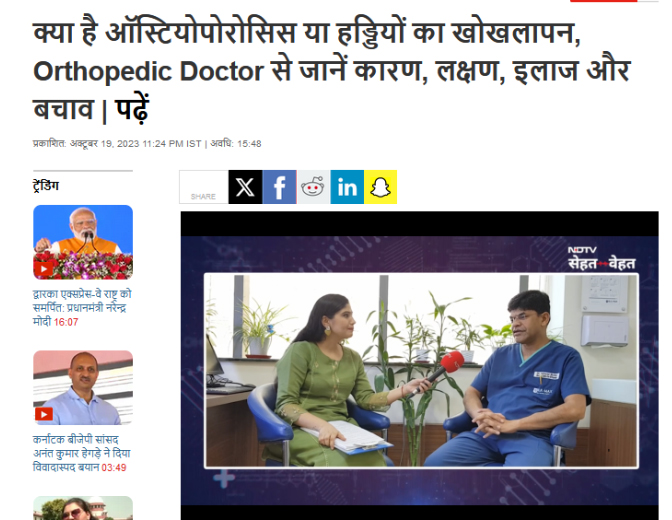
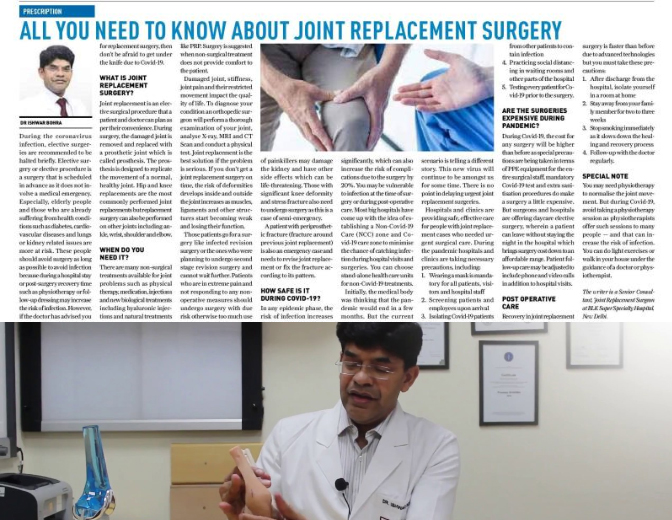
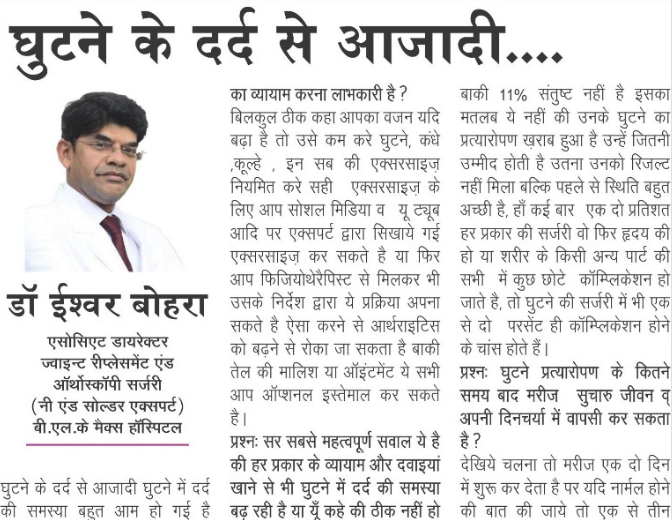
Dr. Ishwar Bohra is a highly respected Senior Orthopedic and Joint Replacement Surgeon with more than 24 years of experience in the field. Renowned for his expertise in knee and joint replacement procedures, he has successfully performed over 25,000 joint replacement surgeries, earning the trust of patients from across India and abroad.
Currently serving as the Director of Orthopaedics and Joint Replacement Surgery at BLK-Max Super Speciality Hospital, Dr. Bohra is recognized for combining advanced surgical techniques with a compassionate, patient-focused approach. His commitment to precision, faster recovery, and long-term patient outcomes has made him one of the leading specialists in joint replacement treatment in India.
Dr. Bohra is widely appreciated for his versatile expertise, clinical excellence, and dedication to delivering personalized care to every patient.
Contact us at

Staying abreast with the latest information is the best way to combat diseases in early stages and live a healthy life. Read the latest news & updates here to learn about the recent advancements in joint care and therapeutics.